Schönbrunn Palace in Vienna
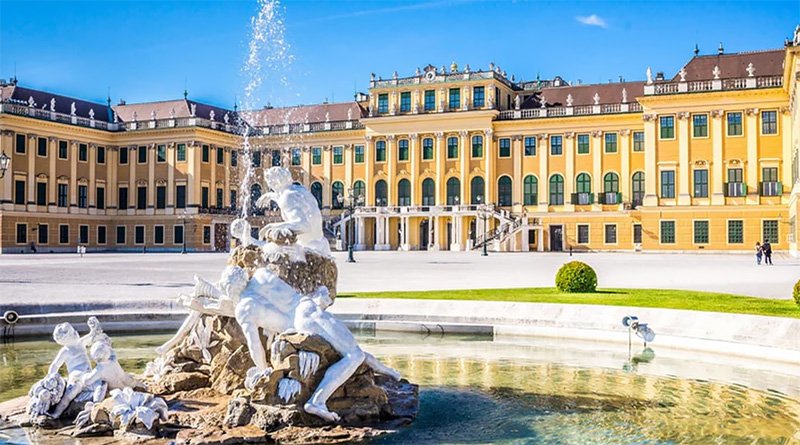
If you’re planning to visit Vienna, Schönbrunn Palace is one of the most iconic landmarks that should be at the top of your travel list. Once the summer residence of the Habsburg dynasty, this UNESCO World Heritage Site reflects the grandeur and power of imperial Austria. Built in the 18th century and closely associated with Empress Maria Theresa, Emperor Franz Joseph, and Empress Elisabeth (Sisi), Schönbrunn stands as a symbol of European aristocratic culture, refined lifestyle, and artistic influence. Even if you are simply strolling through the palace gardens, the estate carries a sense of calm elegance and royal heritage that leaves a lasting impression. If you’re planning your wider trip, explore my Vienna Travel Guide for more museums, palaces, attractions, itineraries and practical travel tips.
What to See
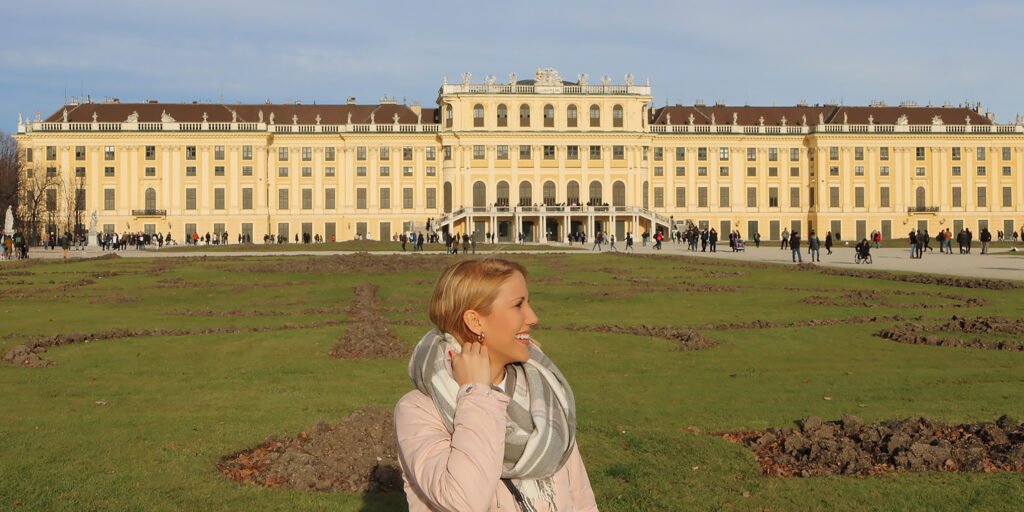
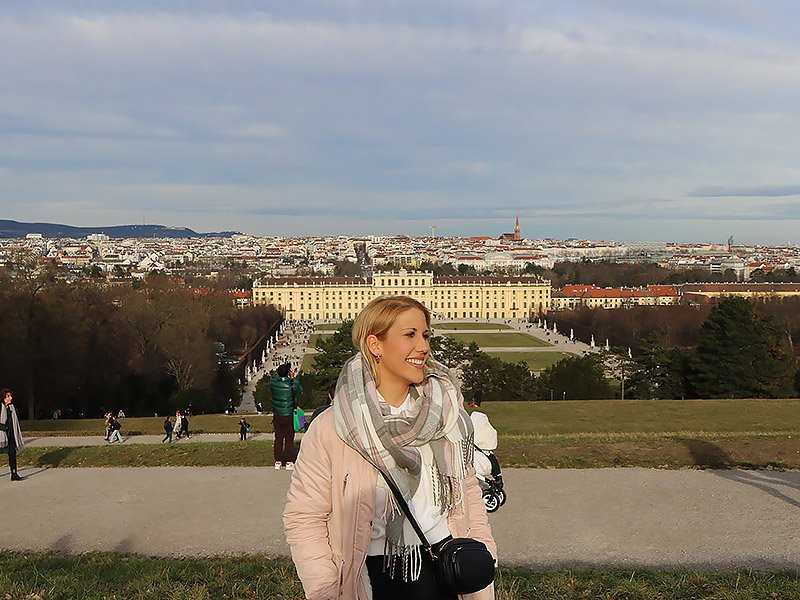
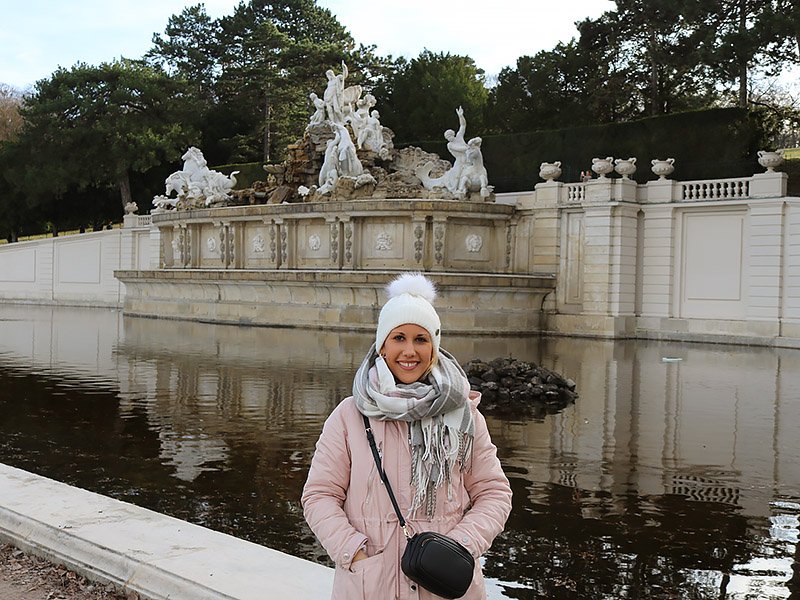
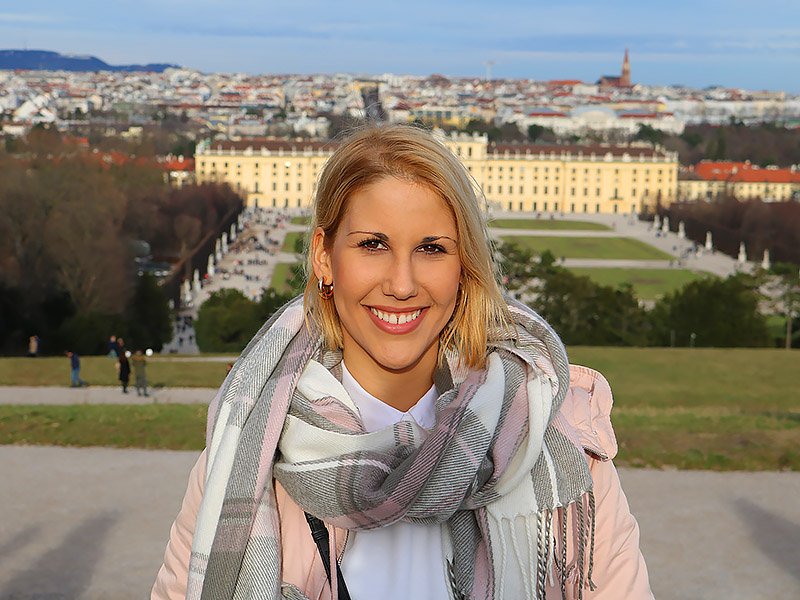
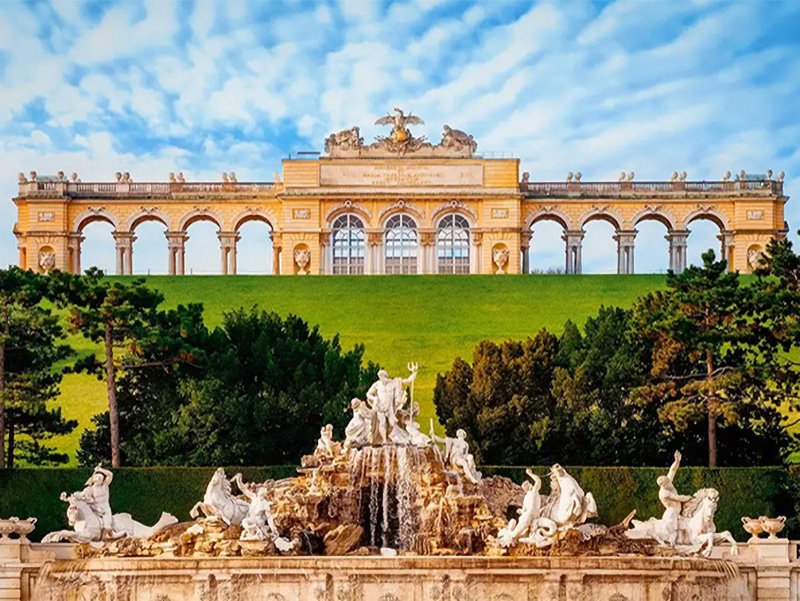
While many travelers choose to explore the palace interior, with its lavishly decorated Baroque rooms and private apartments of Maria Theresa and Emperor Franz Joseph, the estate offers much more beyond its walls. The Schönbrunn Gardens cover a vast area, featuring the beautifully manicured Great Parterre, ornate fountains, and pathways leading to the Gloriette viewpoint, where you can enjoy panoramic views of Vienna. When you reach this point, you’ll find a café inside. However, due to the crowds and the stuffy atmosphere, we decided not to stay there. I recommend bringing your own snacks and drinks and finding a bench with a view instead – especially during the winter months, when the café may not be the most comfortable option.
Additional highlights include the palm house, the orangery, and the world’s oldest zoo, Tiergarten Schönbrunn. Art lovers may enjoy the palace for its preserved frescoes and original interior décor, though Schönbrunn is admired more for its architectural harmony and historical atmosphere than for specific individual paintings.
Is Schönbrunn Palace Worth Visiting?
My experience at Schönbrunn was deeply memorable, even though I did not tour the palace interior. The true magic, for me, was outdoors. The vastness of the gardens, the symmetry of the landscaping, and the attention to detail in every hedge and pathway make you feel as if you’ve stepped back into the era of imperial court life. The estate is grand yet peaceful, beautifully maintained, and full of places to wander and pause. I recommend visiting on a sunny day so you can fully appreciate the scale and beauty of the grounds. I can only imagine how enchanting the estate becomes in spring, when the gardens are in bloom – it is definitely a reason for me to return. If you’re wondering when the gardens are at their best, you can also read my guide to the best time to visit Vienna.
Schönbrunn Palace: Tickets, Opening Hours & Practical Information
📍ADDRESS:
Schönbrunner Schloßstraße 47, Wien
🕚 WORKING HOURS:
Schönbrunn Palace
daily 08:30 – 17:30
Garden
daily 06:30 – 20:00
🚋 PUBLIC TRANSPORT NEARBY:
Schönbrunn Palace is easily accessible by Vienna’s public transport network, with the U4 underground line and several tram and bus routes stopping nearby:
N60, 10A, 10, 52, 60, U4, 51A, N54
🎟️ TICKETS:
Schönbrunn Palace offers different ticket options depending on which parts of the estate you want to visit. Check the official Schönbrunn Palace website for current ticket options, prices and availability.
If you’re planning to visit several major attractions in Vienna, you may also want to compare individual attraction tickets with the Vienna PASS before deciding what works best for your itinerary.
☕🍴 CAFÉ AND RESTAURANT LIST:
Schlosscafe Schonbrunn – Map→
Joseph II Schloss Restaurant – Map→
Kutscher Gwolb Schlossbrau – Map→
Gerster K. u K. – Map→
Gasthaus Tirolergarten – Map→
Manolos 1120 Eis Cafe – Map→
Zum Imperator – Map→
Luv Beachclub Schonbrunn – Map→
Rhino Bistro in Park – Map→
Cafe Gloriette – Map→
Jumbo Schnitzelgarten – Map→
🌐 OFFICIAL WEBSITE:
Schönbrunn Palace
Historical Insights
Schönbrunn Palace traces its origins to the late 16th century, when Holy Roman Emperor Maximilian II had a hunting lodge built on the site. In 1696, Emperor Leopold I transformed it into a grand imperial summer residence for the Habsburg dynasty. Empress Maria Theresa, one of the most influential rulers of Austria, later expanded and redesigned the palace in the mid-18th century, adding the lavish Imperial Apartments. She raised a large family, with 16 children, many of whom played important roles in European history (Joseph II, Leopold II, Maria Carolina, Maria Amalia, Maria Christina, Maria Antonia, Charles Joseph). Schönbrunn served both as a luxurious retreat and the center of imperial power, reflecting the grandeur and influence of the Habsburgs.
Crowds, Rest Areas & Practical Tips
Schönbrunn Palace is one of the most visited landmarks in Vienna, so be prepared for large crowds, especially during weekends and peak travel seasons. While the gardens are spacious and offer many beautiful walking paths, rest areas can sometimes be limited near the most popular viewpoints. If you prefer a quieter moment to take in the scenery, I recommend exploring the less frequented side paths or finding a bench further away from the main palace axis. Bringing your own water and snacks is also a good idea, as cafés on the grounds can become very busy and sometimes quite warm and crowded. With a bit of patience and planning, you can still enjoy a peaceful break amid the grandeur of the gardens.
An additional tip for visiting this site, as well as anything in Vienna, is to wear comfortable shoes, as you’ll be amazed by the city’s vastness and the desire to walk and see everything.
Planning Your Vienna Itinerary?
Explore my complete Vienna Travel Guide for more museums, palaces, attractions, itineraries and practical travel tips.