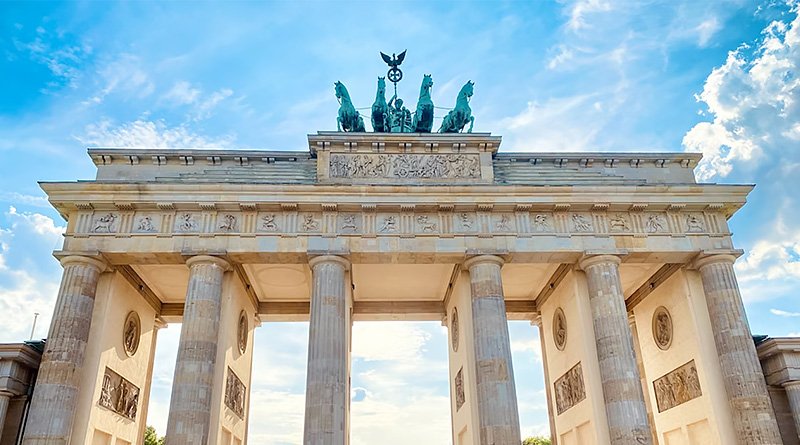
View of the Brandenburg Gate, one of the most famous landmarks in Berlin

Brandenburg Gate in Berlin

Visiting Berlin wouldn’t be complete without seeing the iconic Brandenburg Gate, one of the city’s most famous landmarks. This neoclassical monument, built in the late 18th century, has witnessed centuries of German history – from Napoleon’s occupation to the division of Berlin during the Cold War. Walking through Pariser Platz and approaching the Gate gives you a real sense of Berlin’s vibrant past and present. It’s not just a historical site, but also a perfect starting point to explore the city.

What to See

The Brandenburg Gate is stunning both up close and from a distance. Admire the detailed Quadriga statue on top, depicting the goddess of victory riding a chariot pulled by four horses. Strolling around the Gate, you can also see the nearby memorials and landmarks, including the Holocaust Memorial just a short walk away. Whether during the day or beautifully illuminated at night, the Gate offers countless opportunities for photography and people-watching.

Brandenburg Gate 1

Trip essentials

🚋 PUBLIC TRANSPORT NEARBY:
BUS 100, S1, S2, S25, S26, U5

Why You Should Visit Brandenburg Gate

Visiting the Brandenburg Gate is more than just checking off a tourist attraction – it’s a chance to stand at the heart of Berlin’s history. This is where East and West Berlin were once divided, making it a symbol of unity after the fall of the Berlin Wall in 1989. For history enthusiasts, the Gate provides a tangible connection to Germany’s past, while for casual visitors, it’s an impressive and photogenic landmark that captures the spirit of the city.
Explore more sights in Berlin

👇If you enjoyed this article, leave a like below the post and support the work of this site.

Similar Posts

  • Arco della Pace in Milan

    Located at the edge of the beautiful Parco Sempione, the Arco della Pace (Arch of Peace) is one of Milan’s iconic landmarks, rich in history and symbolic value. Originally commissioned by Napoleon in the early 19th century and completed in 1838 under the Austrian Empire, this neoclassical triumphal arch celebrates peace and the end of…

  • Hofburg in Vienna

    Visiting Hofburg Palace in Vienna feels like stepping straight into the heart of imperial Austria. Once the political center of the Habsburg Empire and today one of the most important landmarks in the city, the Hofburg is a place where history is beautifully preserved in every courtyard, hallway, and museum wing. As someone who loves…

  • Schonbrunn Palace in Vienna

    If you’re planning to visit Vienna, Schonbrunn Palace is one of the most iconic landmarks that should be at the top of your travel list. Once the summer residence of the Habsburg dynasty, this UNESCO World Heritage Site reflects the grandeur and power of imperial Austria. Built in the 18th century and closely associated with…

  • Beach in Barcelona

    Barcelona is famous not only for its rich history and architecture but also for its vibrant beaches that stretch along the Mediterranean coastline. From the lively Barceloneta Beach to quieter spots like Bogatell and Nova Icaria, the city offers a beach experience for every type of traveler. Relax under the sun, enjoy beachside cafes, or…

  • Belem Tower in Lisbon

    The Belem Tower (Torre de Belém) in Lisbon is one of most recognizable landmarks and a UNESCO World Heritage site that stands proudly on the banks of the Tagus River. Built in the early 16th century, during the height of Portugal’s Age of Discoveries, it once served as a fortress and ceremonial gateway to the…

  • Cathedral of Saint Eulalia in Barcelona

    The Cathedral of Saint Eulalia, also known as Barcelona Cathedral, is one of the city’s most iconic Gothic landmarks and a key stop for anyone exploring Barcelona’s historic center. Located in the heart of the Gothic Quarter, this magnificent cathedral dates back to the 13th century and showcases stunning medieval architecture, intricate stonework, and impressive…