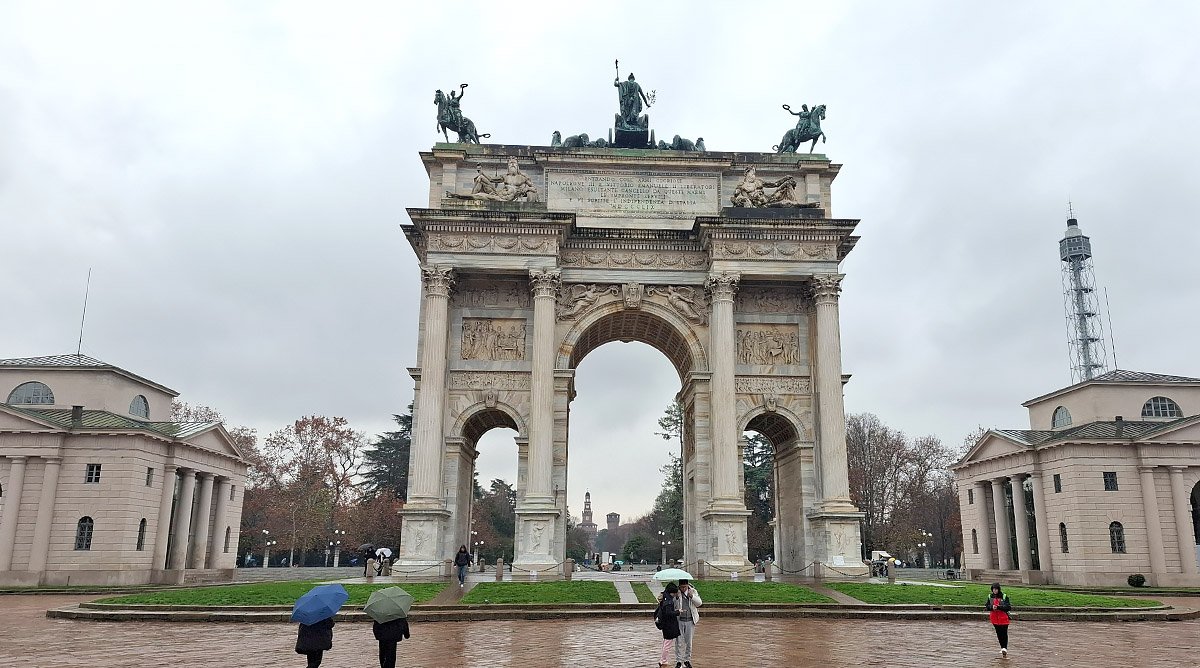
Arco della Pace in Milan
Located at the edge of the beautiful Parco Sempione, the Arco della Pace (Arch of Peace) is one of Milan’s iconic landmarks, rich in history and symbolic value. Originally commissioned by Napoleon in the early 19th century and completed in 1838 under the Austrian Empire, this neoclassical triumphal arch celebrates peace and the end of conflicts in Europe. While it doesn’t house a museum or guided tours, it remains a striking monument that captures the elegance and historical depth of Milan. For travelers exploring the city on foot, it’s a perfect spot to admire architecture and capture memorable photos.
What to See
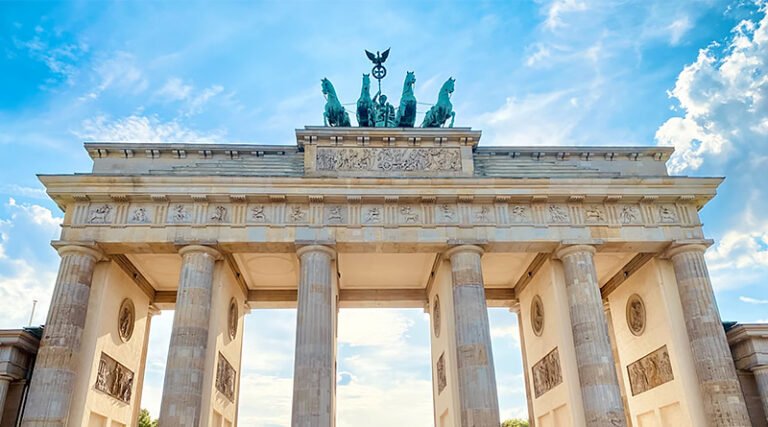
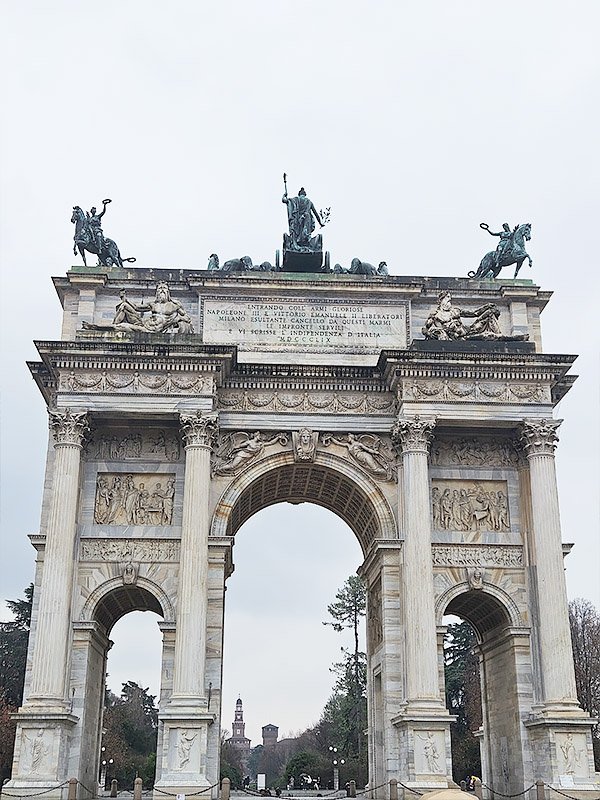
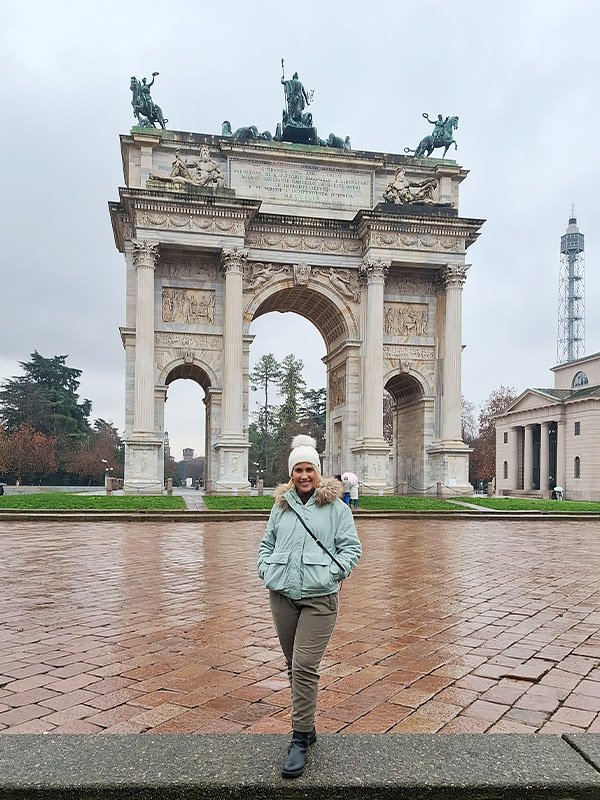
The Arco della Pace is adorned with intricate bas-reliefs, Corinthian columns, and statues that depict military victories and allegories of peace. At the top, the chariot sculpture adds a dramatic flourish to the arch, representing triumph and harmony. Surrounding the arch, the Sempione Park offers a scenic walkway, allowing visitors to enjoy the arch from multiple perspectives and combine the visit with a relaxing stroll in one of Milan’s most loved green spaces.
Why You Should Visit Milan’s Arco della Pace
Even without an internal exhibit or audio guide, the arch is a must-see for photography enthusiasts, history buffs, and those who enjoy exploring Milan’s historic architecture. Its central location near Sforza Castle and other key attractions makes it an easy addition to a walking tour. Standing beneath the arch, you can reflect on its historical significance as a symbol of peace after turbulent times in Europe, making it more than just a decorative landmark.
Tips and Essentials
📍ADDRESS:
Piazza Sempione, 20154 Milano MI, Italy
🚋 PUBLIC TRANSPORT NEARBY:
Bus: 43, 57, N26, 85
Tram: 1, 10
Metro: 1
☕🍴 CAFÉ AND RESTAURANT LIST:
Via Pasteria | Map→
Duomo dal 1952 | Map→
Matilde Osteria | Map→
Dazi Milano | Map→
Living Liqueurs & Delights | Map→
Brigante Restaurant | Map→
Grammeat | Map→
Mammina Pizzeria | Map→
Deseo | Map→
Pizzeria Starita Milano | Map→
Rest area and Crowds
While there are no official guides on-site, the Arco della Pace encourages self-guided exploration. Visitors can read about its history online or in guidebooks to fully appreciate the detailed sculptures and inscriptions. The surrounding park allows for an interactive experience: you can take photos, relax on benches, watch locals enjoying the space, or even enjoy a picnic with a view of this neoclassical masterpiece. There are also several restaurants nearby where you can take a break or have lunch.
Explore more sights in Milan
👇If you enjoyed this article, leave a like below the post and support the work of this site.