Rotunda in Thessaloniki
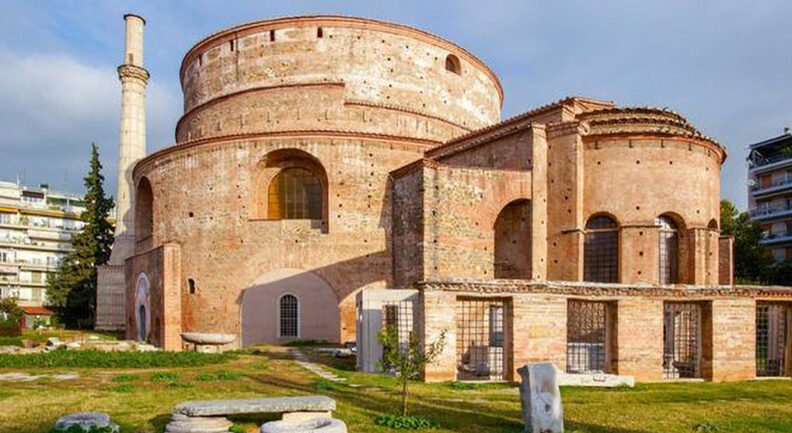
Located in the heart of Thessaloniki, the Rotunda of Galerius — also known as the Church of St. George — is one of the city’s most iconic landmarks and a UNESCO World Heritage Site. Built around 306 AD, this UNESCO World Heritage Site has lived many lives — from Roman temple, to Christian church, and later an Ottoman mosque. You can really feel this mix of cultures when you step inside, and that’s what makes it one of the most unique landmarks in Thessaloniki.
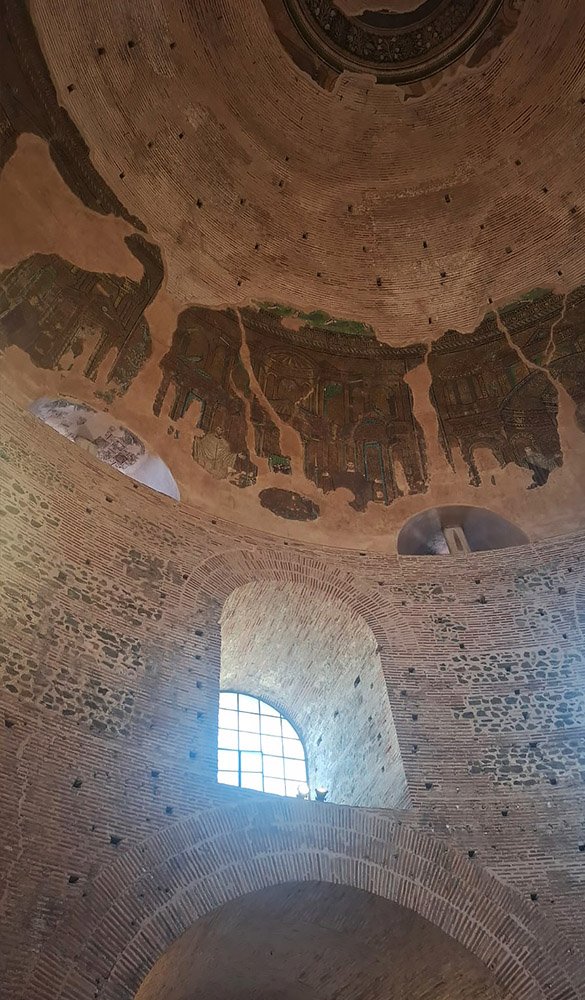
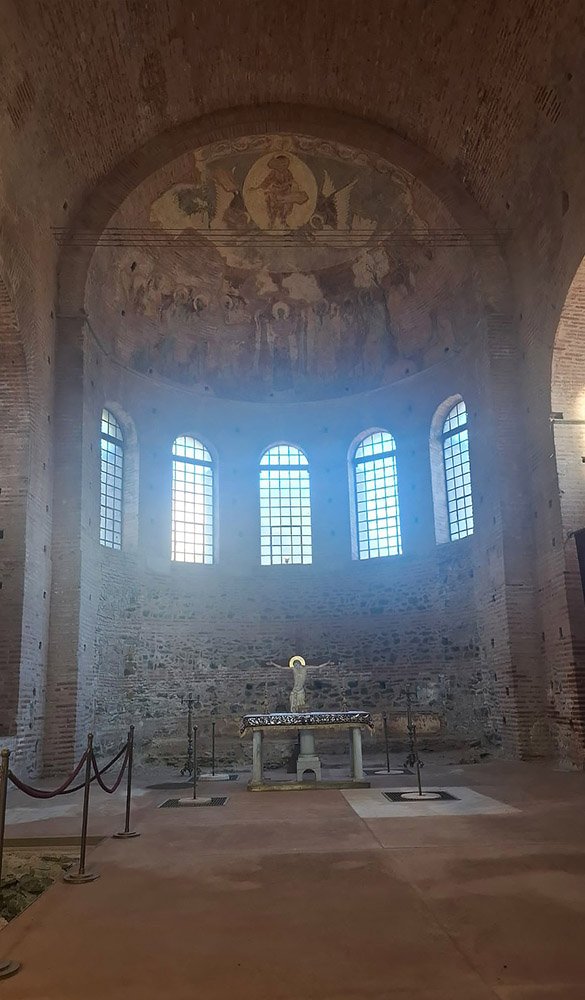
Inside the Rotunda: What to See
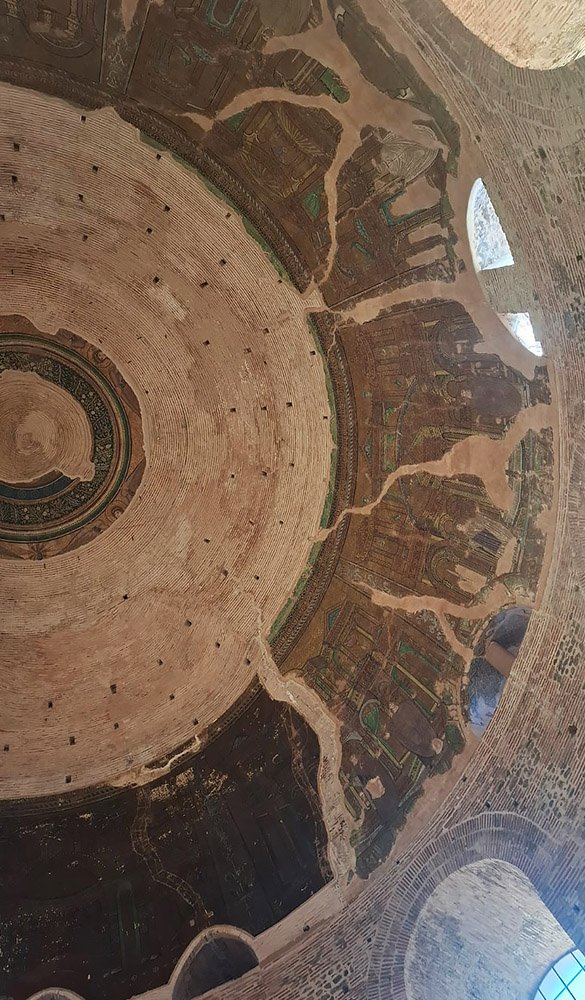
The first thing that grabs your attention is the size — a circular building with walls over 6 meters thick and a dome that soars nearly 30 meters high. It has survived earthquakes, wars, and centuries of change. Inside, you’ll find stunning early Christian mosaics and frescoes, marble details, and traces of its Ottoman past like the tall minaret still standing outside. The main hall is beautiful and atmospheric, with frescoes that each tell their own story.
Why You Should Visit Thessaloniki’s Rotunda
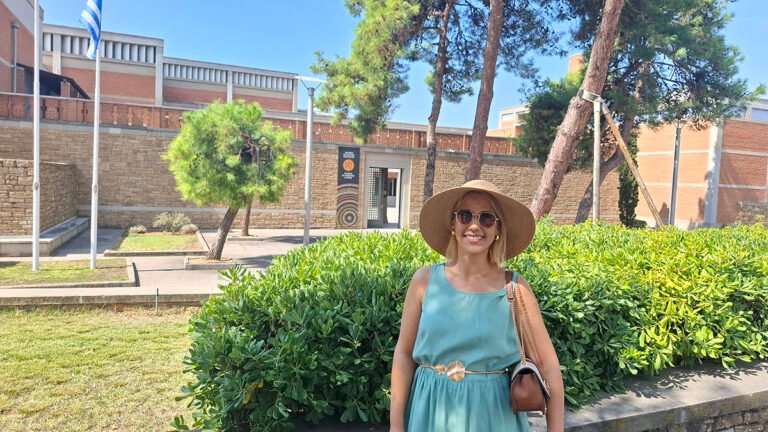
You don’t need a lot of time to explore the Rotunda. In the courtyard, there’s a small scale model of the monument and some interesting architectural remains. If you’re a cat lover, you’ll probably be greeted by a few furry locals lounging around in the sun. I also loved the small exhibition building next door — it has a short 10-minute video that really helps you understand the history and significance of the monument.
Even though the visit is short, it’s one of those stops you definitely shouldn’t skip. For me, the Rotunda perfectly shows how Thessaloniki has always been a crossroads of cultures, with each layer of history leaving its mark on the city.
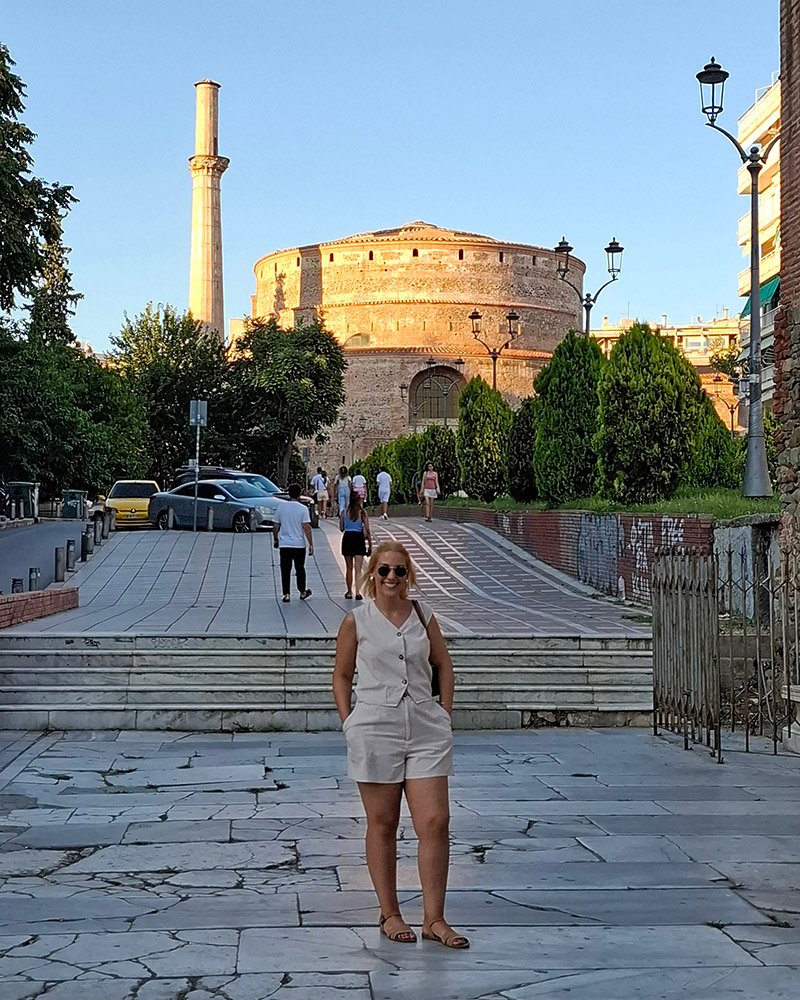
Tips and Essentials
📍ADDRESS:
Platia Agiou Georgiou Rotonta 5, Thessaloniki
🕚 WORKING HOURS:
08:00 – 20:00
❗Working hours in Thessaloniki often change, so give them a quick call before you go.
00 30 2310 204868
🧑🎄 PUBLIC HOLIDAYS:
1 January: closed; 25 March: closed; Good Friday: free entrance; Holy Saturday: 08.00-15.00; 1 May: closed; Easter Sunday: closed; Christmas, 25 December: closed; 26 December: closed
🔔 TIME NEEDED FOR THE VISIT:
30 – 45 min
🚋 PUBLIC TRANSPORT NEARBY:
01N, 01X, 1N, 02K, 10, 14A, 15, 17, 24, 27, 28, 31, 37, 39, 39A, 39B, 44, 45, 45A, 45B, 58, 70, 70A, 71, 71A, 83, 83A, 83B, 83M, 83X
🎟️ TICKETS:
8 EUR | Tickets available at the entrance.
GIFT SHOP: 🚫 | CAFÉ: 🚫
REST AREA: ✅ | TOILET: 🚫
🌐 OFFICIAL WEBSITE:
🚫
Interactivity and Guides
At the entrance of the Rotunda in Thessaloniki, you’ll receive a leaflet with a detailed overview of the building, its historical and cultural significance, and what to expect inside. As you explore the interior, written explanations guide you through specific sections of the monument, helping you appreciate its art and architecture. While there isn’t much interactive activity beyond the friendly cats that roam the courtyard, you’re free to take photos both inside the Rotunda and in its open spaces. In the exhibition building, there is a large interactive display featuring a map of Thessaloniki with all the city’s major landmarks and short descriptions of their significance. This makes the Rotunda a perfect stop for anyone wanting to experience Thessaloniki’s history and iconic landmarks.