Checkpoint Charlie in Berlin
Visiting Checkpoint Charlie in Berlin was one of those experiences that truly made me pause and reflect. Located in the heart of Berlin, this historic landmark once marked the most famous crossing point between East and West Berlin from 1961 to 1989. Checkpoint Charlie remains one of the most prominent symbols of the Cold War. For decades, it symbolized the tension, division, and yearning for freedom that defined this city’s history. My visit didn’t last long – it’s a place you can easily see while walking through the city – but the thought of what this checkpoint once represented gave me chills.
What to See
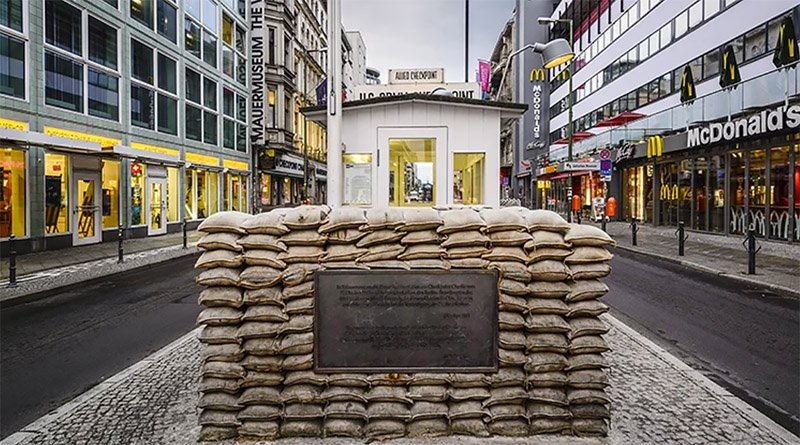
Today, Checkpoint Charlie is a symbolic site rather than an operational border crossing, but it has been carefully preserved to tell its story. You’ll find a reconstruction of the original guardhouse, flags, and sandbags, alongside historical photos and panels that vividly portray the era of the Berlin Wall. Just nearby is the Mauermuseum (Wall Museum), where you can see real-life escape tools – from modified cars and hot air balloons to surfboards – used by East Germans trying to flee to the West. These displays bring to life the incredible courage and desperation of those who risked everything for freedom.

Why You Should Visit Berlin’s Checkpoint Charlie
This is one of those places everyone recommends seeing when in Berlin – not because of its beauty, but because of what it represents. In an attempt to prevent the continued migration of East Berliners to the West, Soviet leader Nikita Khrushchev erected the Berlin Wall, sealing off East Berlin from the rest of the city. Families, friends, and acquaintances who lived in different parts of Berlin were permanently separated overnight. Visiting Checkpoint Charlie helps you understand Germany’s complex history and the human stories behind it. If you want to truly grasp Berlin’s culture, resilience, and mentality, standing here – where history literally divided a city – is essential. It’s a humbling reminder of how freedom and unity should never be taken for granted. Also, this visit is about standing in a place that once separated lives and realizing how profoundly history has shaped modern Berlin.
Tips and Essentials
📍ADDRESS:
Friedrichstraße 43-45, Berlin
🚋 PUBLIC TRANSPORT NEARBY:
N6, M29, U6
☕🍴 CAFÉ AND RESTAURANT LIST:
Kentucky Fried Chicken | Map→
Einstein Kaffee | Map→
McDonald’s | Map→
Bier’s Currywurst | Map→
Crepes Creperie | Map→
Mundo Tapas | Map→
Berlin Cafe | Map→
Hatay Ocakbasi | Map→
La Gino | Map→
Kamps Backerei mit Backstube | Map→
Barcelona Tapas Bar Restaurant | Map→
Back Factory | Map→
Rest area and Crowds
Checkpoint Charlie is located in a busy part of Berlin, surrounded by cafés, restaurants, and souvenir shops where you can take a short break after your visit. Since it’s one of the city’s most popular tourist landmarks, expect crowds almost any time of day, especially during weekends and holidays. If you prefer a quieter experience, try visiting early in the morning or later in the evening when the streets are calmer. Despite the crowds, the area has a lively atmosphere, and taking a seat at a nearby café can be a nice way to reflect on the powerful history you’ve just witnessed. If you love bringing home souvenirs from your travels, you’ll find plenty of shops in this area – so get ready to browse (and expect slightly higher prices due to the location).